AI’s Debt Party Just Hit The Bill

This week, the market finally did the thing it swore it would not do. It looked at AI spending and asked, “Cool story. Where’s the return.” Oracle’s AI data center buildout triggered real nerves, Broadcom’s margin talk added gasoline, and AI infrastructure stocks slid together. Meanwhile, robotics deals stayed absurdly large, and quantum kept sneaking into public market lanes like it owns the place.
Top 25 Moves
- Oracle’s OpenAI data center delay rumor shakes the whole AI trade
A report said Oracle pushed back delivery timelines on some OpenAI-related data centers because of labor and materials, and Oracle publicly denied the delay. Either way, the headline hit a nerve because it points to a very real bottleneck: building the physical world is harder than scaling software. Investors treated it like a “canary in the concrete,” and AI-linked stocks fell in sympathy. Reuters - Oracle stock caps a brutal week as investors fixate on AI capex and debt
Oracle’s shares fell again after a rough earnings week, with markets reacting to the mix of heavy spending and nervousness about near-term payback. The signal is not “AI is dead.” The signal is “show me the unit economics.” When the market stops clapping on command, only execution survives. Investopedia+1 - Broadcom drops hard on margin worries tied to custom AI chips
Broadcom slid more than 11 percent in a market move that screamed, “We love AI revenue. We hate margin compression.” Custom silicon is the new battleground, but it does not always come with luxury pricing. The bigger story is that Wall Street is now pricing AI like a business, not a religion. Reuters+1 - AI infrastructure stocks fall together, again
Oracle news dragged other AI-exposed names down in the same session, including major chip players, showing how tightly correlated this theme has become. Correlation is great on the way up and vicious on the way down. The trend to watch is whether buyers start separating “compute sellers” from “compute spenders.” Reuters - Oracle’s cloud backlog becomes a double-edged narrative
Oracle has talked up massive backlog tied to AI infrastructure demand, but markets are increasingly asking how quickly that backlog turns into profitable revenue. Backlog can be a flex or a liability if delivery timelines and costs drift. This is the part of the movie where the audience stops cheering for the trailer and watches the actual film. Reuters+1 - SoftBank and Nvidia circle a giant Skild AI round at a $14B valuation
Reuters reported talks for a funding round above $1 billion that could value robotics foundation-model startup Skild AI at about $14 billion. The bet is that the “brain layer” for robots becomes a platform, not a feature. The subtext: embodied AI is pulling capital even when public markets get grumpy. Reuters+1 - Serval hits $1B valuation after a Sequoia-led $75M round
Serval raised $75 million and jumped to a $1 billion valuation, only months after being valued far lower, according to Reuters. It is selling AI automation that starts in IT support and expands across internal operations. This is the classic “replace tickets with agents” play, and investors are treating it like a new ServiceNow-era wedge. Reuters - Horizon Quantum announces a $110M PIPE for its SPAC deal
Horizon Quantum and dMY Squared announced $110 million in PIPE financing to support their proposed business combination. IonQ was named as a lead investor, alongside a Fortune 50 tech company. The bigger trend is quantum companies building thicker capital stacks and clearer routes to liquidity. Horizon Quantum+1 - Intel signs a term sheet to acquire SambaNova, per reporting
Intel signed a nonbinding term sheet to acquire AI chip startup SambaNova, according to Wired. If it closes, it is a clear message that Intel is willing to buy its way into faster AI relevance. The risk is integration and focus, but the intent is unmistakable: stop bleeding time. WIRED - South Korea considers a $3.1B national foundry to boost local chips
Reuters reported South Korea is considering a 4.5 trillion won foundry, aimed at supporting fabless firms and legacy chips. It is a strategic move to reduce dependence and broaden beyond memory dominance. The pattern is global: countries are treating chips like infrastructure, not just commerce. Reuters - India’s Tata lands Intel as a major customer for its chip push
Reuters reported Tata Electronics signed Intel as one of the major customers tied to its planned semiconductor facilities. Tata is investing about $14 billion across a fab in Gujarat and an assembly and testing facility in Assam. The impact is less about one contract and more about India becoming a credible manufacturing node. Reuters - Korea and Arm launch a training push for 1,400 chip specialists
Korea signed an agreement with Arm to train more than 1,400 chip design specialists, according to Korea JoongAng Daily. This is industrial policy aimed at talent, not just steel and concrete. The bigger reality is that skilled designers are now treated like strategic assets. Korea Joongang Daily - Apple and MP Materials expand a rare-earth supply deal to $500M
Reuters reported Apple expanded its supply agreement with MP Materials to $500 million, tied to rare-earth magnets and domestic supply chain capacity. It is another step in shifting critical materials closer to home. Supply chain sovereignty is now a product feature, not just a government talking point. - Kalshi wins a major court ruling against regulators
A federal appeals court blocked the CFTC from stopping Kalshi’s election contracts, according to Reuters. Regardless of where you land on prediction markets, this is a big legal validation for the product category. Regulation is becoming the true moat, and Kalshi just widened it. Reuters - Kalshi closes a $1B Series E at a $9B valuation
Kalshi said it raised $1 billion in Series E funding, led by Paradigm, valuing it at $9 billion. Big capital now has a clearer legal path to justify the bet. The bigger trend is “markets for everything” meeting “AI for everything,” with data and liquidity as the prize. Reuters - Castelion raises $350M to scale hypersonic weapons production
Reuters reported defense startup Castelion raised $350 million in a Series B led by Lightspeed and Altimeter. It is a reminder that deep tech funding is not only chips and models. Defense manufacturing speed is becoming a competitive advantage, not a back-office detail. Axios - Eon raises $300M at a $4B valuation for AI-powered backup and recovery
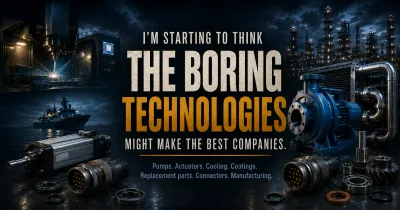
Reuters reported Eon raised $300 million led by investors including Lightspeed, with a valuation of $4 billion. Backup sounds boring until ransomware, outages, and AI infrastructure complexity make it existential. The “boring infrastructure” category is quietly becoming premium again. - Axiado raises $100M to push silicon security deeper into the stack
Reuters reported Axiado raised $100 million in a Series C extension, bringing its total Series C to $200 million. Hardware-rooted security matters more as AI systems become high-value targets. The big trend is “trust moves down the stack,” from software to silicon. - Humanoid robotics hype meets skeptical engineers at a major summit
AP reported more than 2,000 people attended a humanoid robotics summit in Mountain View. The vibe is optimistic, but experts still flag hard problems in dexterity and real deployment. The signal is healthy: capital is excited, and engineers are still stubbornly bound to physics. AP News - AI infrastructure buildouts run into the physical-world wall
The Oracle data center drama is a case study in the same constraint hitting everyone: power, materials, labor, and permitting. Software timelines are measured in sprints, but data centers run on calendars and cranes. The winners will be the teams that treat construction like a core competency. Reuters+1 - Markets start punishing “AI spend now, profits later” stories
This week’s price action shows investors are more sensitive to payback periods and margins than they were even a quarter ago. That does not kill AI. It forces clearer strategy and better execution. It is the end of vibe capex. Barron’s+1 - Robotics funding stays massive even as public AI stocks wobble
Skild AI’s rumored round is the cleanest example: private markets are still willing to underwrite long-horizon embodied AI bets. The gap between private optimism and public skepticism is widening. That spread creates opportunity for disciplined builders and pain for hype merchants. Reuters+1 - Quantum’s capital markets pipeline keeps expanding
Horizon Quantum’s PIPE is part of a broader push by quantum firms to line up capital ahead of public listings or mergers. The long game is building durable software and tooling ecosystems while hardware matures. Quantum is still early, but its financing is starting to look more “semiconductor-like.” Horizon Quantum+1 - National chip strategies shift from slogans to facilities and customers
South Korea’s foundry proposal, Tata’s Intel customer win, and Korea’s Arm training pact all point the same direction: ecosystems, not announcements. Countries want domestic capacity plus domestic talent plus anchor customers. That triangle is the new baseline. Reuters+2Reuters+2 - Supply chain sovereignty expands beyond chips into critical materials
Apple’s expanded rare-earth commitment is the cleanest signal this week that materials are now part of tech strategy. If magnets, substrates, or power gear bottleneck, the best AI model in the world still ships late. The new moat is not just code. It is control of the physical inputs.
Full Insights
Insight 1. AI’s First Real Reckoning Is About Concrete, Not Code
This week marked a turning point in how markets and operators think about artificial intelligence. For nearly two years, AI conversations centered on models, parameters, and benchmarks. This week, the focus shifted to concrete, steel, labor, power, and timelines.
The Oracle news cycle, whether the reported delay proves material or not, exposed a deeper truth. Building AI infrastructure is not like scaling software. Data centers require land, permits, specialized labor, transformers, cooling systems, and long supply chains. When any one of those breaks, timelines slip. Markets reacted not because Oracle is weak, but because the physical constraints are real.
This is why AI infrastructure stocks moved together. Correlation surged because investors realized the bottleneck is shared. Chips can be ordered. Models can be trained. But data centers must be built sequentially, often under regulatory and labor constraints that cannot be optimized away.
What is really happening under the surface
AI demand is colliding with the slowest-moving parts of the economy. Power grids. Construction labor. Long-lead equipment. Even if capital is abundant, execution capacity is finite.
Companies that treated infrastructure as a background function are now discovering it is core strategy.
The strategic shift
- AI winners will vertically integrate infrastructure planning earlier in product roadmaps.
- Partnerships with utilities, construction firms, and local governments become competitive advantages.
- Capital efficiency matters again. Not because AI is unprofitable, but because timelines now drive returns.
The era of abstract AI roadmaps is over. The winners will be those who can ship physical systems on schedule.
Subscribe to continue reading