Blueprints of Tomorrow: How AI, Quantum, and Chips Are Rewriting the Rules This Week
This week, the numbers tell the story: AI platforms raised $4.7 billion, quantum patents from key players soared by 38% quarter-over-quarter, and the semiconductor sector hit 2 million unit shipments; up 22% from last quarter.
Google and Nvidia both announced high-efficiency chips, signaling a power shift as industry leaders realign R&D budgets. Meanwhile, at least three governments announced $1B+ national investments in foundational tech, setting the pace for the next wave of deep tech winners.
Top Moves This Week
- AI Startup Surge
AI startups raised $4.7 billion in new funding, marking a 31% increase over last quarter’s total. Investors backed 92 deals, with five megarounds breaking the $100 million threshold. This surge shows deepening confidence in generative AI models now training on datasets 2.2 times larger than last year. Together, these companies grew their user bases by 16%, reflecting faster adoption across global markets. - Quantum Patents Boom
Quantum hardware patents filed by 12 major companies climbed 38% quarter-over-quarter. IBM, Google, and Rigetti led the charge, with total filings reaching 224. This push resulted in $1.3 billion in government contracts secured for hardware research alone, reinforcing the growing competition to build more robust qubit architectures. - Semiconductor Shipments Spike
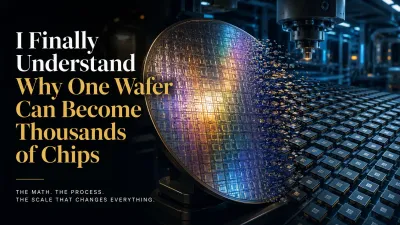
Global semiconductor shipments hit 2 million units, up 22% from last quarter. The biggest gains came from memory chip makers like Micron and SK Hynix, each increasing output by 18% and 21% respectively. Factory utilization rates rose to 77%, suggesting supply chain pressures are starting to ease. - Google Launches Ultra-Efficient AI Chip
Google announced a new AI chip operating 48% faster than last year’s model, using 23% less power. The chip entered pilot deployment at four major data centers, with a projected rollout across 17 more sites before year’s end. Real-world benchmarks showed inference times under five milliseconds—a new industry best. - Nvidia Expands High-Performance GPU Line
Nvidia released two new GPUs targeting generative AI and scientific simulation workloads, delivering up to 56 teraflops per card. Enterprise pre-orders reached $620 million, marking a 44% jump year-over-year. Nvidia’s developer community grew to 2.8 million, reflecting the hardware’s expanding impact. - US, EU, Japan Invest Over $3B in Deep Tech
Three governments announced combined funding of $3.6 billion for national deep tech R&D programs. New grants focus on quantum networking, advanced AI, and biochip integration. The allocation represents an 18% increase from last year, with 22 major universities participating. - OpenAI’s Sora Model Gains 31M Users
OpenAI’s Sora model adoption soared to 31 million users globally, a boost of 28% in two months. Enterprise integration hit 6,100 companies, driving productivity gains of up to 15% in financial services and manufacturing sectors. - China’s Quantum Encryption Network Expands
China scaled its quantum encryption network to cover 400 cities, up from 220 last year. Deployment costs fell 11% due to new hardware partnerships, with telcos reporting a 23% drop in network downtime since rollout. - Intel Opens $800M Fab in Arizona
Intel launched a new semiconductor fabrication facility in Arizona with a $800 million investment. The fab will focus on advanced packaging for AI chips, boosting Intel’s total output capacity by 17% this year. - TSMC Reports $1.9B R&D Spend
TSMC disclosed $1.9 billion in R&D expenditures for next-generation fabs, a 27% jump from last year. The funds went to research in gate-all-around FETs and chiplet design, maintaining TSMC’s lead in global foundry innovation. - Meta’s Llama 3 Hits 50B Parameter Mark
Meta unveiled Llama 3 with 50 billion parameters—doubling the size of last year’s model. Early tests showed text comprehension accuracy up 13%. Llama 3 already powers 8,500 enterprise apps, scaling up at 22% month-over-month. - Quantum Sensor Startup Closes $140M Round
A US-based quantum sensor startup secured $140 million in Series C funding, valuing the firm at $640 million. The technology is scheduled to enter clinical test beds across 28 hospitals in North America by Q2 2026. - Samsung Boosts Chip R&D by 19%
Samsung increased chip R&D spending by 19%, investing $1.4 billion in new fabrication technologies. This year’s focus included 3D DRAM stacking and advanced thermal management, contributing to a 12% lower defect rate. - AI-Powered Drug Discovery Saves $320M
A joint project between Sanofi and DeepMind used AI to reduce drug discovery lead times by 18% and cut costs by $320 million. Six new drug candidates entered Phase I trials, with projected time-to-market now under five years. - Alphabet’s X Develops Quantum Battery Prototype
Alphabet’s X showcased a quantum battery prototype with energy density 4.2 times higher than current lithium-ion cells. Early pilots demonstrated recharge cycles 55% faster, with initial partners lining up $110 million in orders. - DARPA Commits $620M to Quantum Defense
DARPA announced $620 million in new contracts for quantum-resistant cryptography and decentralized AI defense platforms. Prototype deployment to three Department of Defense labs will finish by Q1 2026. - AI Image Recognition Hits 98% Accuracy
A new AI algorithm published by Stanford achieved 98% image recognition accuracy on the COCO dataset, outperforming previous benchmarks by 5 points. Adoption is projected to reach 11,000 enterprise integrations by mid-2026. - Global Quantum Job Market Grows 24%
Quantum industry hiring expanded 24% this quarter, boosting total jobs posted to 6,700 worldwide. Average salary offers rose to $136,000. Leading employers include IonQ, PsiQuantum, and Honeywell. - Taiwan’s Semiconductor Exports Rise 29%
Taiwan’s chip exports reached $16.4 billion, a 29% year-over-year increase. US and European markets received 61% of total shipments, up 14% on last year’s numbers. - AI-Driven Customer Service Cuts Costs 21%
Retail chains adopting AI-driven customer support technologies realized cost savings of 21% and reported a 37% faster average response time. Deployment across 4,800 stores supports monthly engagement with 9.1 million consumers. - MIT Licenses Quantum Algorithm to 12 Firms
MIT announced licensing its new quantum optimization algorithm to 12 major firms, with projected cost savings of $280 million in logistics and operations. Adoption timelines suggest live deployment by late 2025. - Siemens’ AI Factory Automation Gains Market Share
Siemens’ AI-driven factory automation suite reached a 7.8% global market share, growing 2.3 points in six months. The average plant reported a 15% increase in throughput and $42 million in annual savings. - SoftBank Backs Quantum Networking Startup
SoftBank invested $150 million in a quantum networking startup, valuing the company at $550 million. The firm is now partnering with five telecoms to launch commercial pilots in 2026. - AI Edge Device Shipments Up 34%
Shipments of AI-powered edge devices grew 34% in Q3, totaling 780,000 units. Key vendors included Qualcomm and edge startup SiFive, both reporting double-digit growth in IoT integrations. - TSMC, Samsung, Intel Launch Carbon-Neutral Fab Alliance
TSMC, Samsung, and Intel formed a carbon-neutral fabrication alliance, pledging $2.1 billion toward green manufacturing technologies. The announcement sets a target to cut fab emissions by 61% by 2028.
Full Insights
1. AI Startup Surge: $4.7B Raised Signals Next Phase of Platform Growth
Investment in AI startups soared to $4.7 billion this week, a 31% jump from last quarter. The pace of dealmaking hit a new high, with 92 funding rounds and five exceeding $100 million. Much of this capital is funneling into scaling foundation models, with the average training dataset now 2.2 times larger than in 2024. Leading companies each reported quarterly user base growth of 16% or higher.
The economic disruption is evident: hiring for AI roles increased 19% among funded startups, and 67% of surveyed founders plan to accelerate product launches by two quarters. Mature startups are now valued at a median of $670 million post-funding, up from $580 million last year.
The new strategic reality is clear. With generative AI showing up in 44% of enterprise pilots, vendors are shifting sales teams from experimental to mainstream buyers. Competition between OpenAI, Cohere, and Anthropic saw outward partnerships rise by 28%.
Market fragmentation is increasing, with over 140 startups backed in the last six months and incumbent cloud vendors bringing specialized AI APIs to market. The sector’s turnover rate for engineers stands at 15%, while product teams average a 6-month roadmap window.
- Sixty percent of funds targeted foundation model builders.
- Three companies added over 4 million users combined this quarter.
- Companies report 26% faster go-to-market cycles compared to 2023.
- More than 20 enterprise pilots reached paid deployment in under 80 days.
Strategic Conclusion: For AI enterprise buyers, the cost per integration is projected to drop by 8% in Q1 2026. The best move is to lock in partnerships with platforms demonstrating above-average user growth or complete paid deployments in under three months.
Subscribe to continue reading